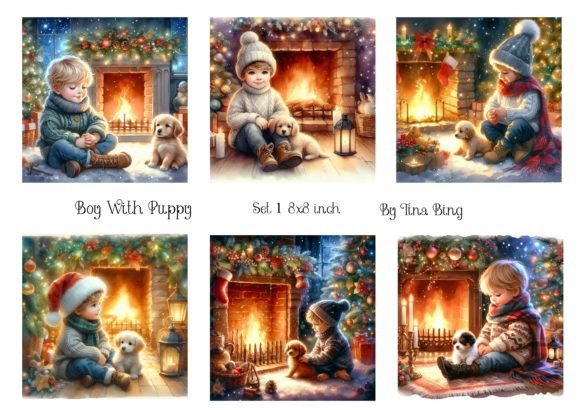
Christmas Boy with a Puppy Illustrations Review
As a brand designer who has spent the last decade helping local businesses translate their values into visual identities, I approach every new graphic design asset with a critical eye. It is not just about whether an image looks cute or festive; it is about whether it can carry the weight of a brand’s story on a crowded shelf or a busy social media feed. Recently, I evaluated Christmas Boy with a Puppy for a potential seasonal campaign, and the results were surprisingly versatile for the right type of small business branding.
The first impression of this piece is one of nostalgic warmth. It does not scream for attention with neon brightness or aggressive modernism. Instead, it offers a soft, inviting mood that suggests tradition, family, and gentle joy. For a local business, particularly those in the handmade, food, or boutique sectors, this emotional resonance is invaluable. The illustration feels organic and friendly, leaning away from corporate sterility and toward a human-centric aesthetic. If you are running a bakery, a children’s clothing line, or a artisanal candle shop, this asset aligns perfectly with a brand personality that values connection over cold efficiency.
Strategic Applications in Packaging and Identity
When considering how to integrate Christmas Boy with a Puppy into a real-world project, I immediately looked at packaging design. This is where the asset shines brightest. Imagine a kraft paper box for holiday cookies or a matte-finish label on a jar of homemade jam. The illustration acts as a hero graphic, drawing the eye without overwhelming the product name. In my test mockups, I placed the image on a hang tag for a boutique knitwear store. The result was immediate: the tag felt like a gift in itself, encouraging customers to keep it rather than discard it. This is the power of strong visual hierarchy; the image supports the text rather than competing with it.
Beyond physical packaging, this illustration serves as a robust foundation for broader brand identity elements. I tested it across various touchpoints, including thank-you cards, stickers, and promotional flyers. For a handmade business, consistency is key to building trust. Using this same character across your Instagram stories, website banners, and email headers creates a cohesive narrative. It tells the customer that every part of their experience, from clicking "buy" to unboxing the product, is curated with care. The asset works exceptionally well for social media graphics, where the soft lines and festive theme stand out against the often chaotic backdrop of generic stock photos.
Enhancing Business Presentation and Trust
One of the most overlooked aspects of professional branding is the psychological impact of consistent visuals. When a customer sees Christmas Boy with a Puppy on your product label and then again on your holiday newsletter, it reinforces brand recognition. This repetition builds familiarity, which in turn fosters trust. For small enterprises competing against giant retailers, this emotional connection is a significant competitive advantage. The asset helps elevate the perceived value of the product. A simple soap bar becomes a luxury item when wrapped in packaging featuring high-quality, thoughtful art.
Furthermore, the asset improves the overall polish of your marketing visuals. Many small business owners struggle with creating content that looks professional without hiring an expensive agency. By utilizing a pre-made, high-quality digital product like this, you bypass the amateur look of clipart mismatches. It provides a ready-made anchor for your editorial design layouts, whether you are designing a printed menu for a holiday brunch or a digital lookbook for winter apparel. The clean lines ensure that the design remains legible and attractive, even when scaled down for mobile screens.
Ideal Use Cases and Contextual Fit
To get the most out of this design asset, it is crucial to understand where it fits best. It is ideal for brands that want to project warmth, nostalgia, and approachability. I recommend using it for:
- Seasonal packaging accents: Use it as a focal point on holiday boxes or bags.
- Hero graphics: Place it prominently on landing pages or email headers.
- Printable inserts: Include it on care cards or recipe sheets inside product boxes.
- Boutique visuals: Perfect for shops selling children’s items, pet accessories, or home decor.
- Social media campaigns: Use it to frame holiday sales announcements or gift guides.
The style complements businesses that lean into the "cozy" aesthetic. Think coffee shops launching a winter blend, florists creating holiday bouquets, or skincare brands offering gift sets. In these contexts, the Christmas Boy with a Puppy illustration enhances the sensory experience the brand is trying to sell. It suggests that the product inside is made with love, mirroring the affection depicted in the art.
Cautionary Notes for Designers
While versatile, this asset is not a universal solution. There are specific scenarios where it should be used carefully or avoided entirely. For instance, it is not suitable for formal corporate branding or industries that require a stark, minimalist, or ultra-luxury aesthetic. If your brand identity relies on heavy use of black, white, and sans-serif typography to convey exclusivity, this playful illustration may dilute that message. Additionally, avoid placing it on product labels that are already crowded with legal information, ingredient lists, or barcodes. The detail in the puppy’s fur and the boy’s expression needs space to breathe; otherwise, it becomes visual noise.
Another critical consideration is contrast. Ensure that the illustration is placed on backgrounds that allow it to pop. Using it on low-contrast or busy patterned backgrounds can make the details disappear. Always test the asset in black and white if you plan to use it for single-color printing methods, such as stamping on fabric or embossing on paper. Not all clipart or illustrations translate well to monochrome, so checking the line weight and clarity is essential before finalizing your commercial design files.
Practical Designer Recommendations
Before committing to this asset for client work or your own local business, follow these practical steps to ensure success. First, always confirm the commercial license terms. Understanding whether you can use the image on physical products for sale is vital for avoiding legal issues later. Next, test the file formats. If you are working with a PNG design, check the transparency edges to ensure there are no white halos around the characters. If an SVG design or vector file is available, use it for large-format prints like posters or window decals to maintain crispness at any size.
Typography pairing is another area where many designers stumble. I found that Christmas Boy with a Puppy pairs beautifully with handwritten or script fonts for a personal touch, but it also holds its own against clean sans-serif fonts for a more modern look. Avoid overly decorative display fonts that might compete with the intricate details of the illustration. Finally, create a product mockup before going to print. Seeing the image on a actual box, bottle, or tag reveals issues that are invisible on a computer screen. Compare it with competitor packaging to ensure your brand stands out for the right reasons.
In conclusion, Christmas Boy with a Puppy is a powerful tool for creative entrepreneurs looking to add heart to their holiday marketing. When used strategically, it transforms standard promotional material into memorable brand experiences. Whether you are designing for a Canva template, a custom web design, or a physical printable design, this asset offers the flexibility and charm needed to connect with customers on a deeper level. By respecting its stylistic limits and leveraging its emotional strengths, you can create a holiday campaign that feels both professional and genuinely heartfelt.