Review: 8 Christmas Bunny Sublimation Bundle for Embroidery
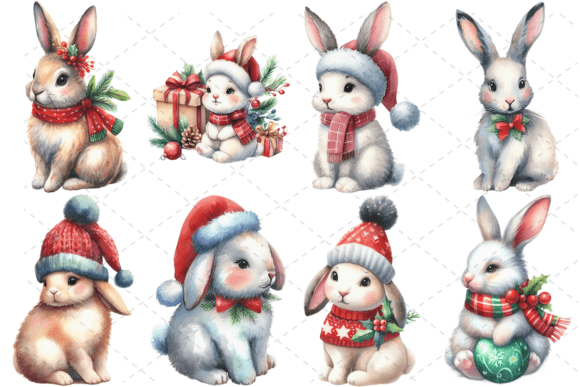
As a designer who spends more time staring at stitch simulations than I do sleeping, I have learned to be skeptical of bundles. The market is flooded with generic holiday graphics that look fine on a screen but turn into a tangled mess under the needle. However, when I opened the 8 Christmas Bunny Sublimation Bundle, my initial reaction was one of cautious optimism. These are technically categorized as Illustrations, intended for sublimation printing, but their clean lines and distinct color blocking make them prime candidates for digitization and embroidery adaptation. I wanted to see if these charming bunny motifs could hold up in a real-world embroidery project, specifically for a client looking to launch a line of high-end holiday gifts.
First Impressions: Mood and Visual Personality
The first thing that strikes you about this bundle is the whimsical yet polished aesthetic. The bunnies are not overly cartoonish; they possess a soft, storybook quality that appeals to both children and adults. For an Etsy seller or small shop product creator, this versatility is gold. The designs feature clear shapes and minimal noise, which is crucial when translating a raster image into a vector-based machine embroidery design.
In terms of mood, the bundle exudes warmth and nostalgia. It avoids the harsh, neon brightness often seen in cheap holiday clip art, opting instead for a cohesive palette that suggests comfort. When I imagined these stitched onto fabric, I didn’t see cheap promotional items. I saw heirloom-quality personalized gifts. The visual personality is gentle, making it ideal for baby embroidery or delicate home decor. However, because these are sublimation files, the detail level is high. A designer must carefully assess which details can be retained as satin stitch borders and which need to be simplified into fill stitch areas to prevent puckering.
Real-World Application: The Tote Bag Test
To test the practical viability of the 8 Christmas Bunny Sublimation Bundle, I simulated a project for a local boutique owner. She wanted a run of canvas tote bags for her holiday market stall. Canvas is a sturdy fabric, but it has a visible weave that can swallow small details. I selected one of the simpler bunny designs from the bundle, focusing on the silhouette rather than the intricate internal patterns.
The result was promising. By treating the sublimation art as a reference for an applique design, we used a solid felt backing for the bunny’s body and added satin stitching for the eyes and whiskers. This approach bypassed the density issues of trying to stitch every pixel of the original illustration. The tote bag design looked professional, with clean edges and no thread breaks. Customers were drawn to the tactile quality of the embroidery, which elevated the perceived value of the bag far beyond a simple printed graphic. This experience confirmed that while the bundle is sold for sublimation, its true potential for crafters lies in using it as a blueprint for textured, high-value handmade products.
Navigating Fabric and Hoop Constraints
While the designs are charming, they require careful handling depending on the substrate. If you are planning sweatshirt embroidery, you must account for the stretch and pile of the fabric. The finer details in some of the bunny illustrations may get lost in the fuzz of a fleece hoodie. In such cases, I recommend increasing the stitch density slightly or opting for a larger hoop size to allow for bolder lines.
Conversely, for custom apparel like thin cotton t-shirts, the density must be managed aggressively. A heavy fill stitch on a lightweight fabric will cause pulling and distortion. Here, the running stitch becomes your best friend. Use it for outlines and delicate features like ears and tails. For curved surfaces like caps, the complexity of the bundle’s illustrations needs to be reduced. A cap’s curved panel cannot accommodate wide, dense designs without wrinkling. I advise selecting the simplest bunny pose from the 8 Christmas Bunny Sublimation Bundle and scaling it down to fit a standard cap hoop, ensuring the center of gravity is balanced.
Dark fabrics present another challenge. Since these are sublimation files, they rely on color for definition. When embroidering on black or navy, you cannot rely on subtle shading. You must ensure high contrast in your thread colors. A white or cream bunny on dark fabric looks striking, but you must verify that the design does not rely on light-on-light details that will vanish. Always test your digitized version on scrap fabric before committing to the final finished product.
Commercial Value and Brand Consistency
For commercial embroidery professionals, consistency is key. Using a cohesive bundle like this helps maintain brand identity across a product line. Whether you are creating holiday embroidery for kitchen towels, pillow covers, or aprons, the uniform style of the bunnies ensures that your collection looks curated rather than cobbled together. This professionalism builds customer trust. Buyers are more likely to purchase a set of matching items if the design language is consistent.
Moreover, the "cuteness" factor drives engagement. In the world of digital embroidery file sales and handmade goods, emotional connection sells. These bunnies evoke a sense of joy and innocence, making them perfect for wedding gifts for winter weddings, baby showers, or family matching pajamas. By adapting these illustrations into embroidery, you add a layer of luxury that pure printing cannot achieve. The texture of the thread invites touch, enhancing the giftability of the item.
Practical Designer Notes for Best Results
Before you rush to digitize or print, keep these practical tips in mind to ensure success with the 8 Christmas Bunny Sublimation Bundle:
- Check Licensing: Ensure you understand the usage rights. While these are sublimation files, using them as a base for embroidery designs for resale may require specific commercial licenses. Always confirm before selling design assets or finished goods.
- Stabilizer Selection: Use a cut-away stabilizer for stretchy fabrics like sweatshirts and a tear-away for stable woven fabrics like tote bags. Proper stabilization prevents the design from shifting during stitching.
- Mockup Testing: Create black and white mockups of the designs to check for contrast. If the design loses its shape in grayscale, it will likely lack definition when stitched with limited thread colors.
- Detail Inspection: Zoom in on the smallest elements, such as the bunny’s eyes or nose. These may need to be simplified or enlarged in your embroidery software to ensure they stitch out cleanly without thread bunching.
- Fabric Texture Match: Consider how the fabric texture interacts with the design. Rough linen may obscure fine details, while smooth satin will highlight every stitch imperfection. Choose the design complexity accordingly.
In conclusion, the 8 Christmas Bunny Sublimation Bundle is a versatile resource for the creative entrepreneur. While it is marketed for sublimation, its clean, illustrative style makes it an excellent foundation for embroidery projects. With careful attention to stitch type, density, and fabric choice, these designs can be transformed into stunning embroidered patches, apparel, and home decor. For the craft business owner willing to put in the technical work, this bundle offers a pathway to creating unique, high-value holiday merchandise that stands out in a crowded market.